Masks in puppet theatre
Project EduArt is co-founded by the Erasmus+ Programme of the European Union
General information
- Slogan: “My masks and me behind them - Masks in puppet theatre”
- Country / City where the offer was designed: Austria, Vienna
- Location / Space: Indoor with tables, chairs and space to move, big classroom or theatre is possible. Parts can also be done outside. For some modules Computer with internet connection for online sessions.
- Length: 10 modules with a total duration of approx. 25 hours
- Type of the used art: Theatre, Creation of papier-mâché masks based on plaster casts
- Type of the offer: Workshops (6 in-person, and 4 online)
- Specification of the target group: Adults or young people with (minor disability won’t represent a barrier)
- Number of participants: from 8 to 12
- Main social problems treated: Communication, Discrimination, role attribution, stereotypes and lack of self-knowledge
- Competences / skills focused in the course: dialogue, communication, creative self expression, collaborative work and confidence building, self awarness and personality building
- Partners: Südwind, Puppet Theatre LILARUM – Nachbarschaftzentrum Wien 1030
- Masks creation, object theatre, discrimination, art, socialisation
Description of the offer
- How the mask is used
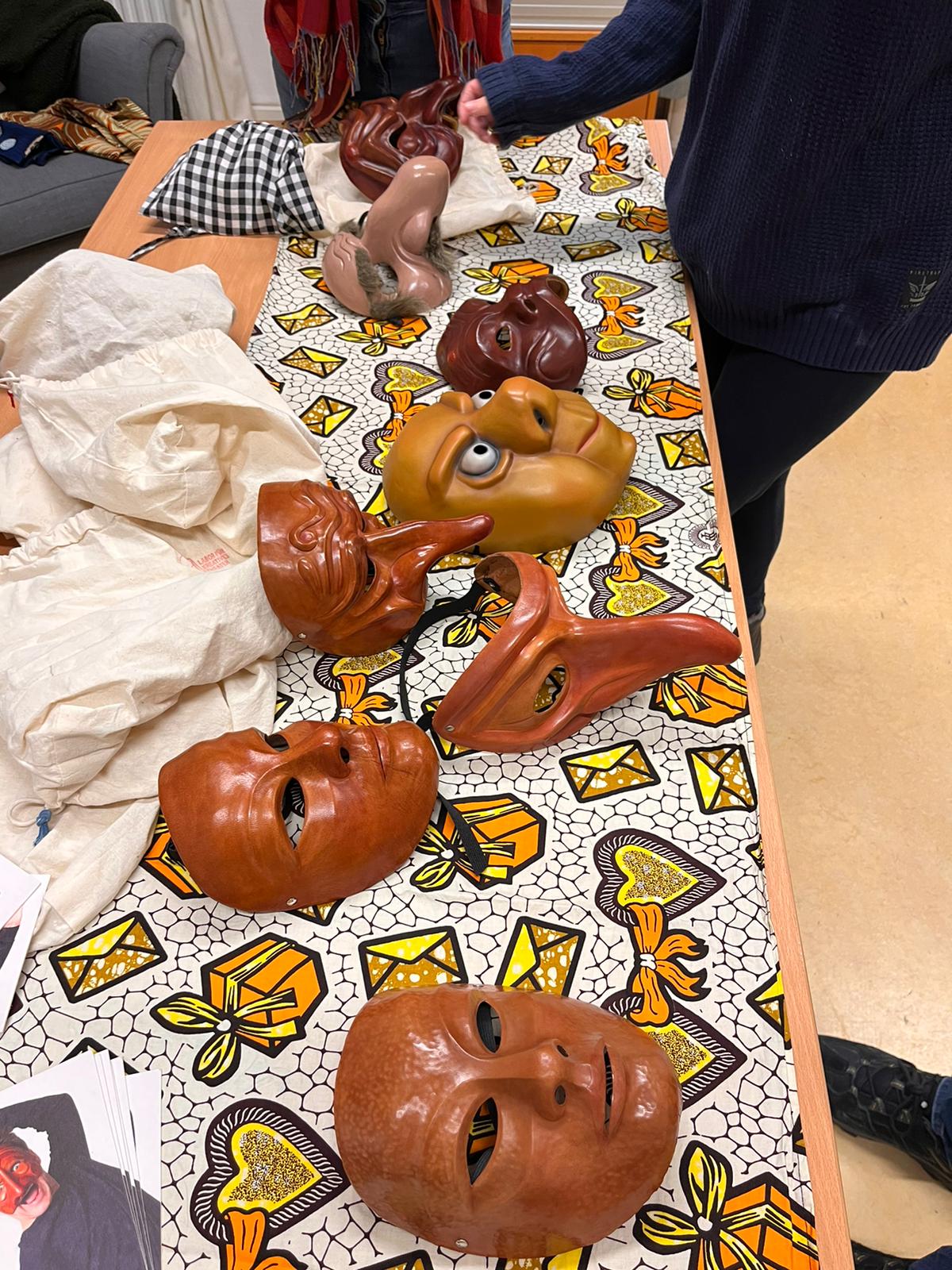
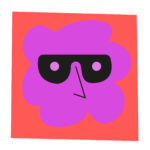
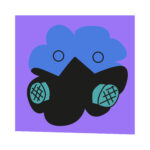
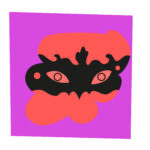
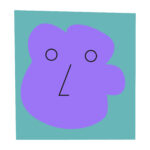
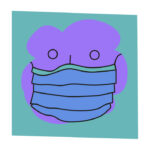
In the workshops, different types of masks are addressed and tried out (A, B, C, D) – both their social and/or theatrical significance as well as the artistic techniques behind them.
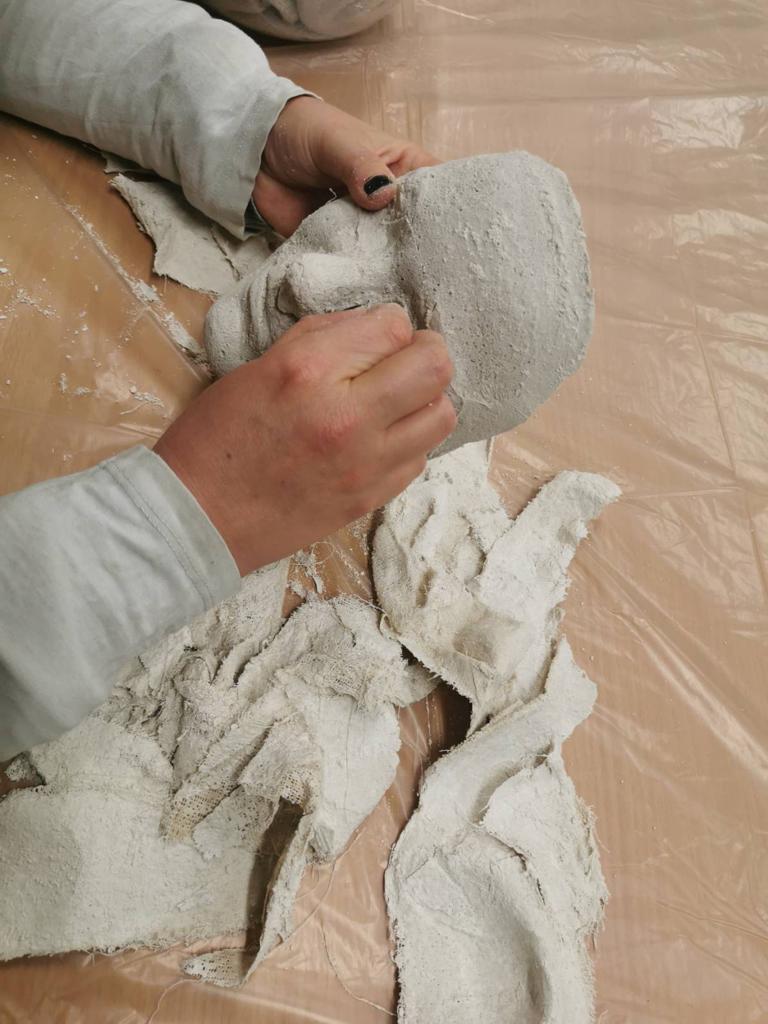
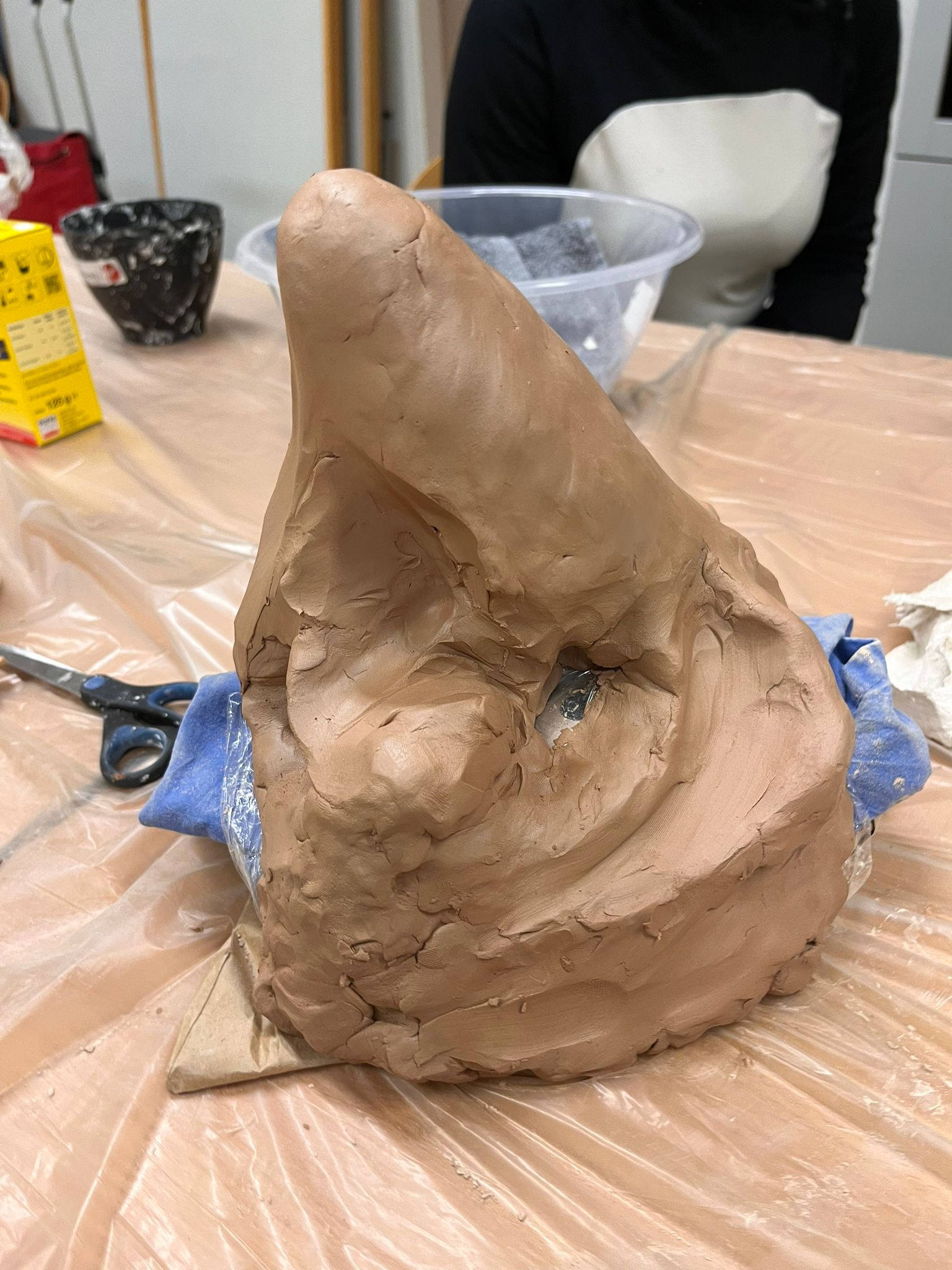
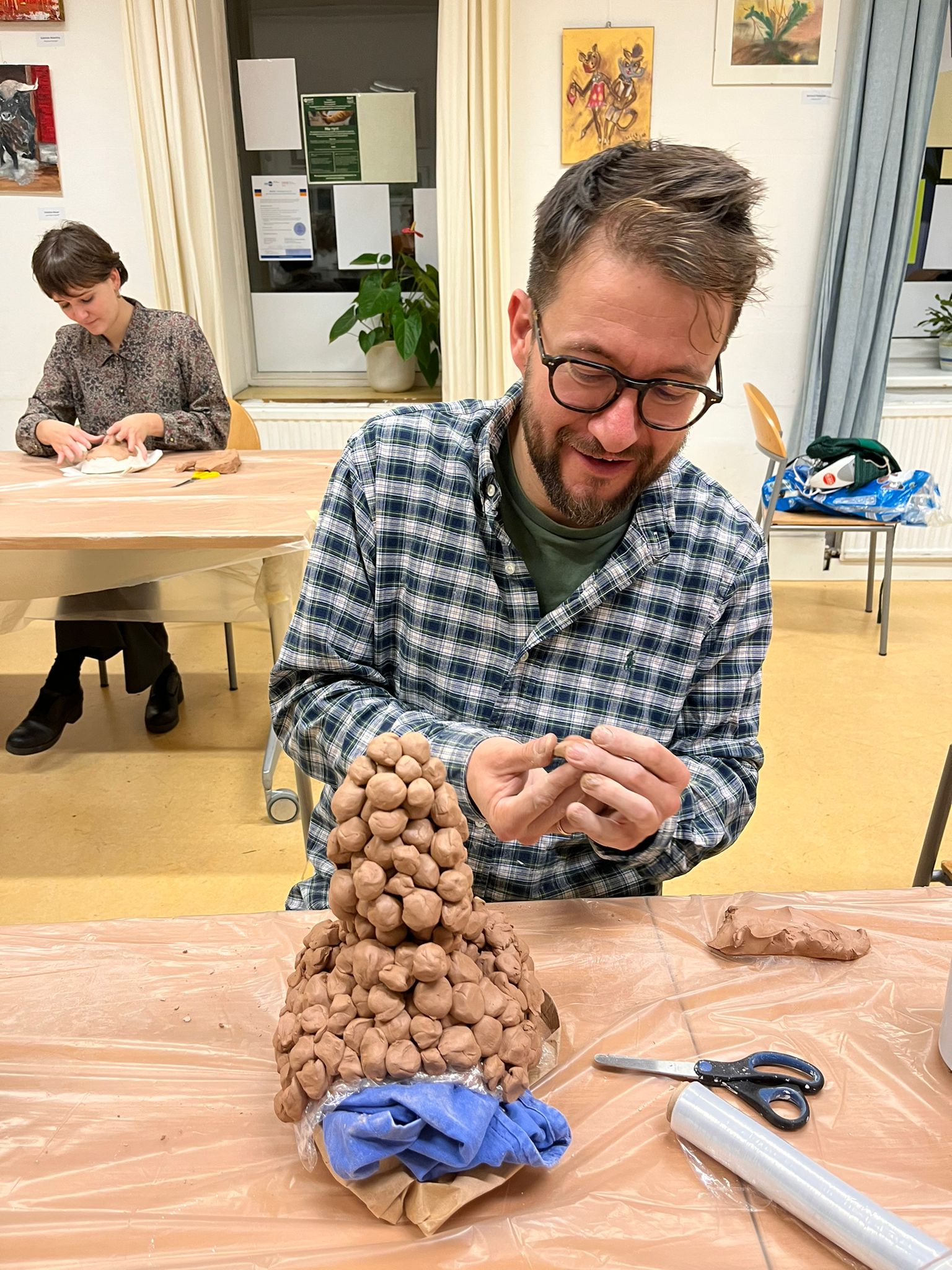
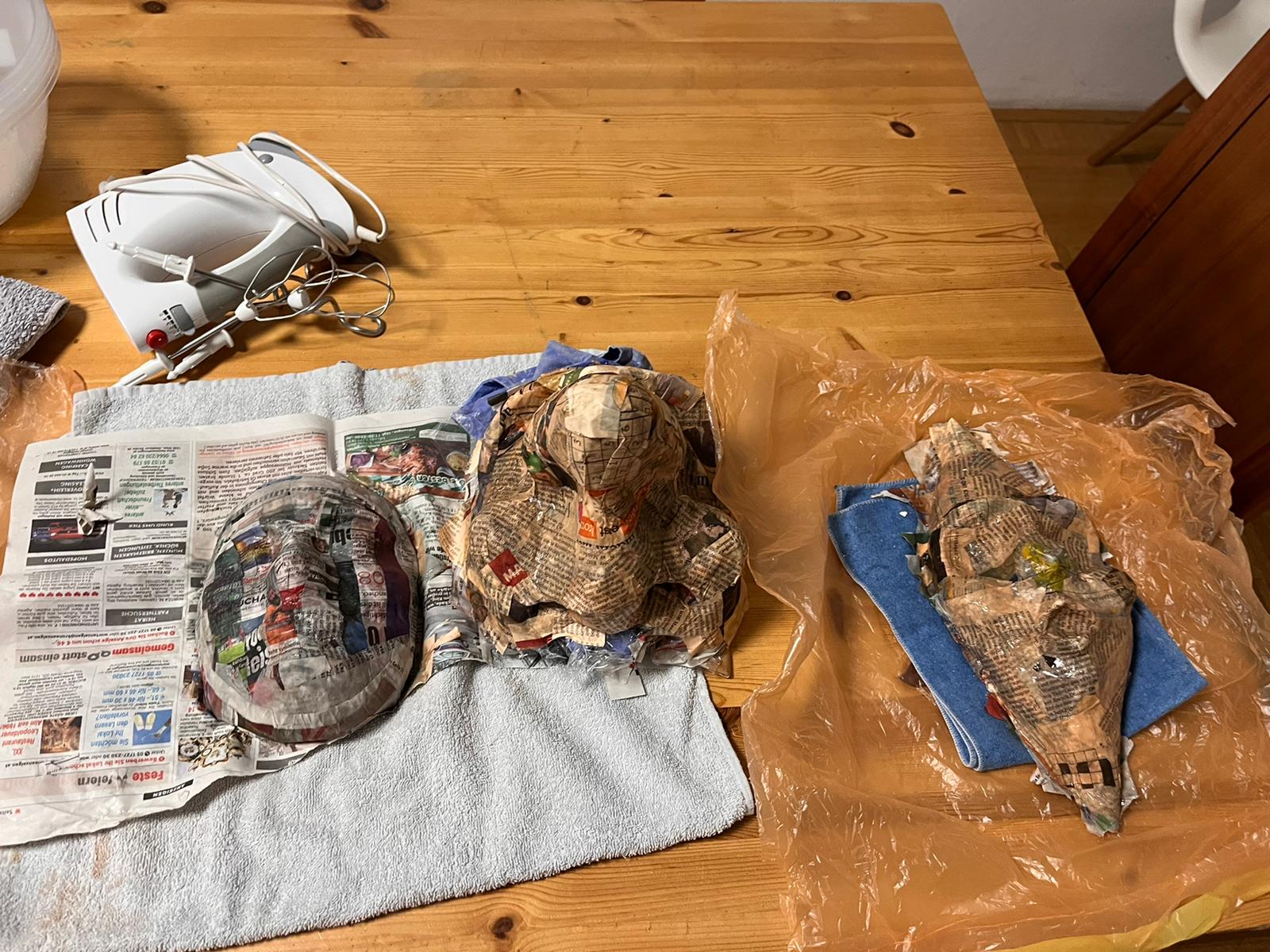
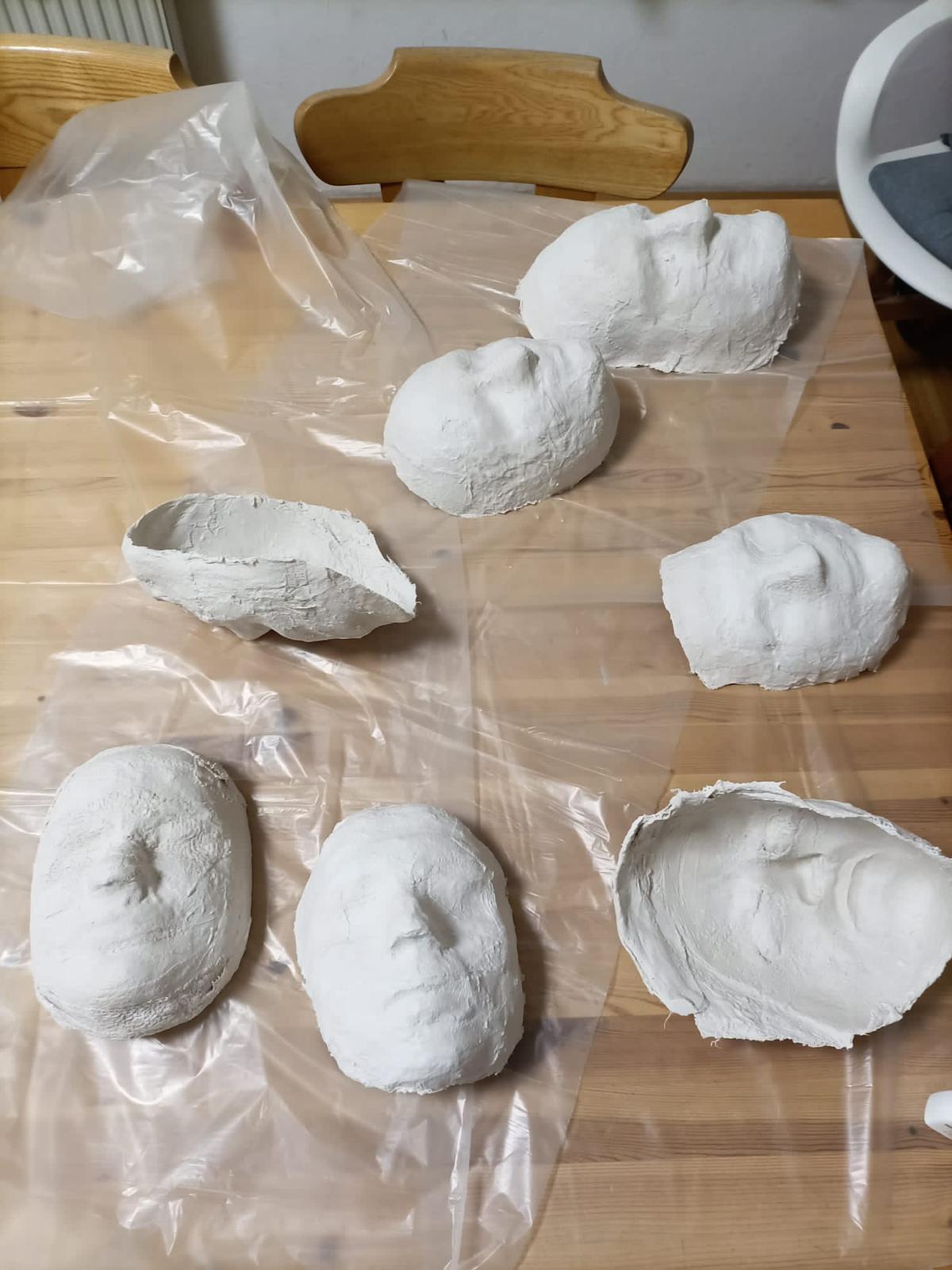
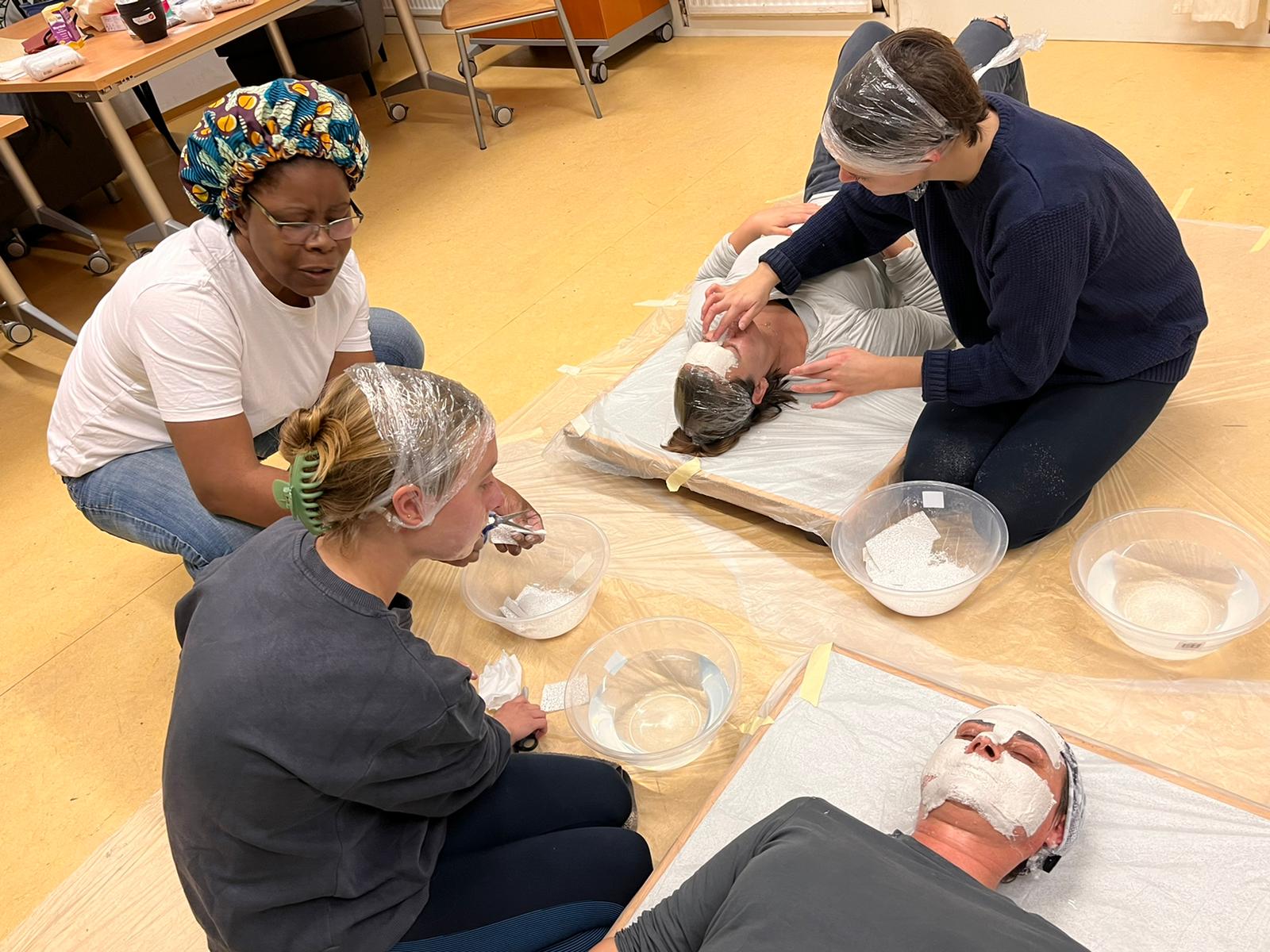
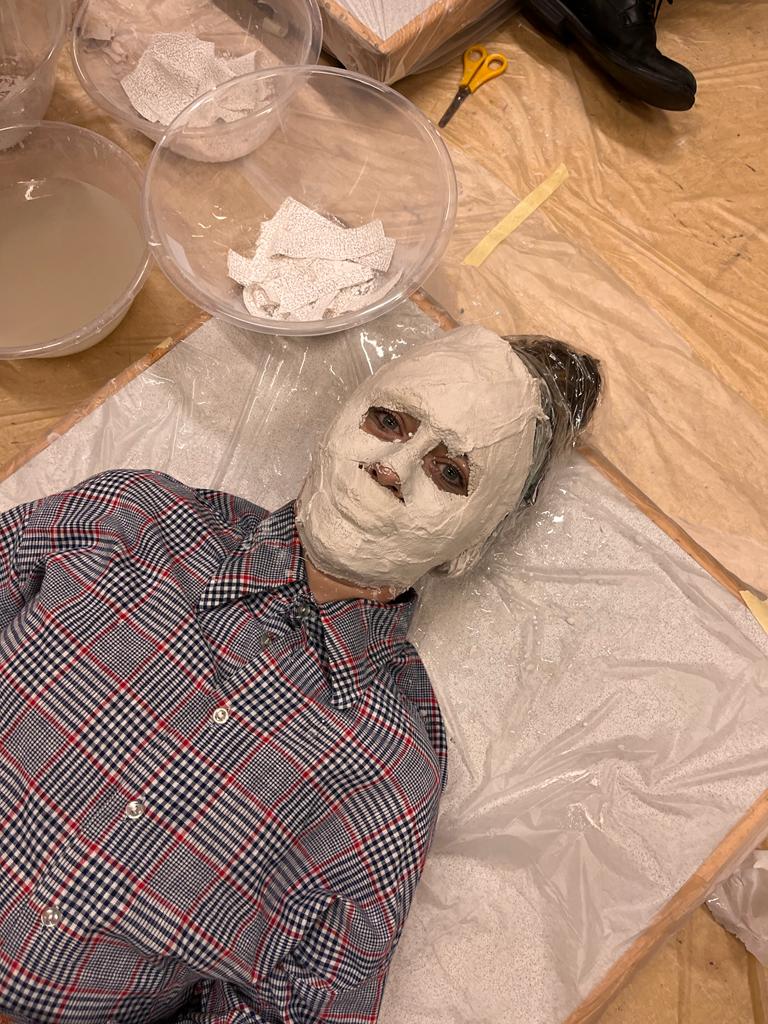
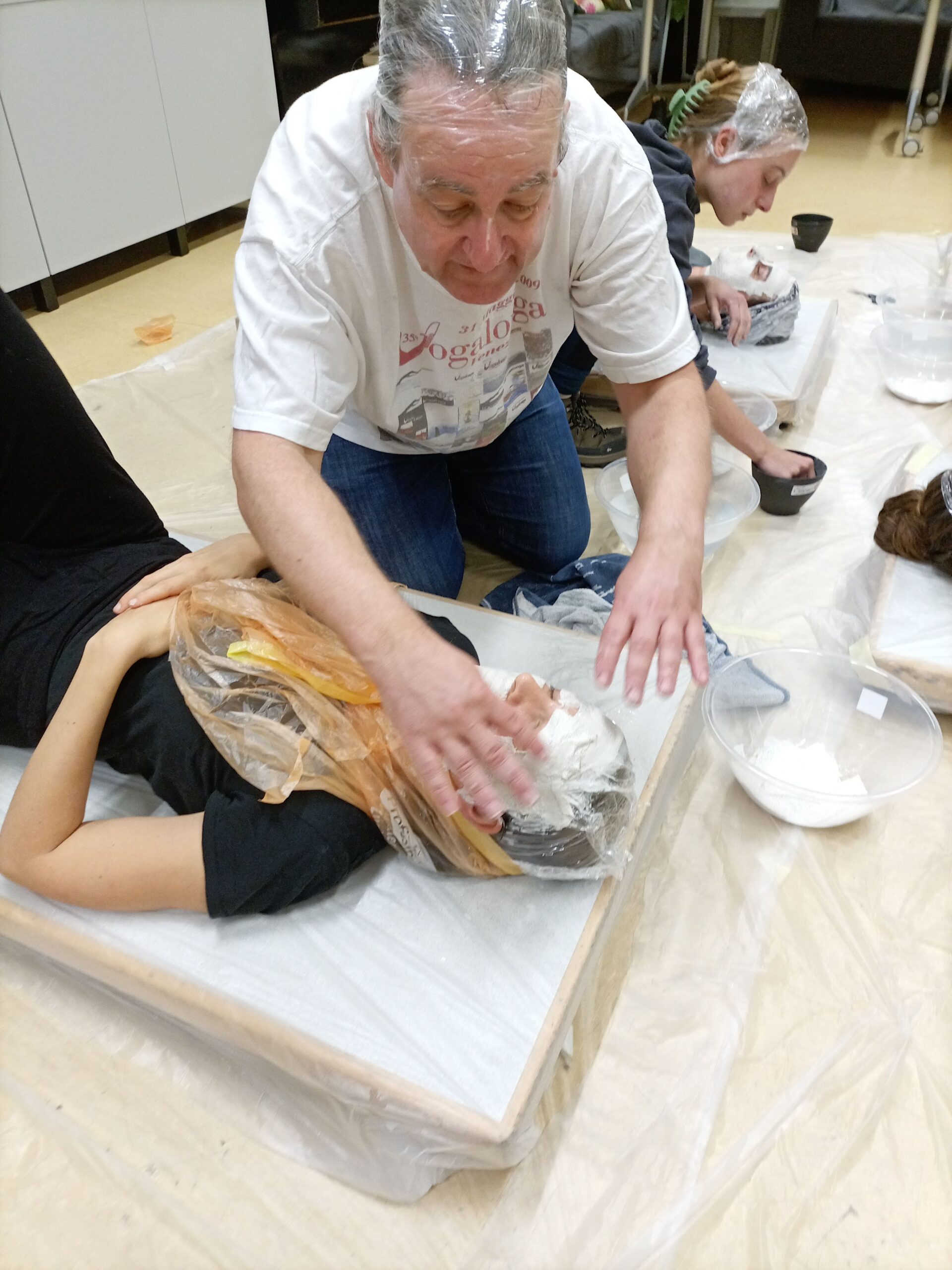
The creation of the final outcome, a papier-mâché mask (D) is a longer creative process that involves various preparatory steps and a preoccupation with different types of masks, as well as the technical procedure itself: plaster cast, plaster face, papier-mâché, and creative design. The following 4 main aspects covered are:
- „This is me” – the introduction-mask
We start with the well-known mouth-nose protection or FFP2 mask – a symbol of protection against illness. We redesign this covering, which reveals so little of our facial expressions and state of mind, into a „self-presentation mask”.
So there are two kinds of masks in this first task: The participants transform the original function of the mask, which we have to wear by rule, into masks that represent them as well as possible and express something about them and their current mood.
- “Objects as masks” – representatives of different character traits
While this first presentation mask is our public and consciously chosen face, the objects/everyday objects are different. Through them we try to reflect aspects and sides of ourselves that are not so obvious or easily seen. These objects are not masks in the classical sense, but rather projections of character traits that are representative of us and through which we can find and create the final face mask.
The participants choose their objects intuitively, so there are no “wrong objects” but there is always an inner connection between the chosen object and the person. This gives the objects a mask-like function.
- “The body as a mask” – Embodying the objects
The characteristics found through the objects, representing projections of own aspects, are embodied and explored physically. Short scenes can be improvised, transforming the body into a “mask” of these characteristics.
- “The invisible gets visible” – Artistic face papier-mâché mask
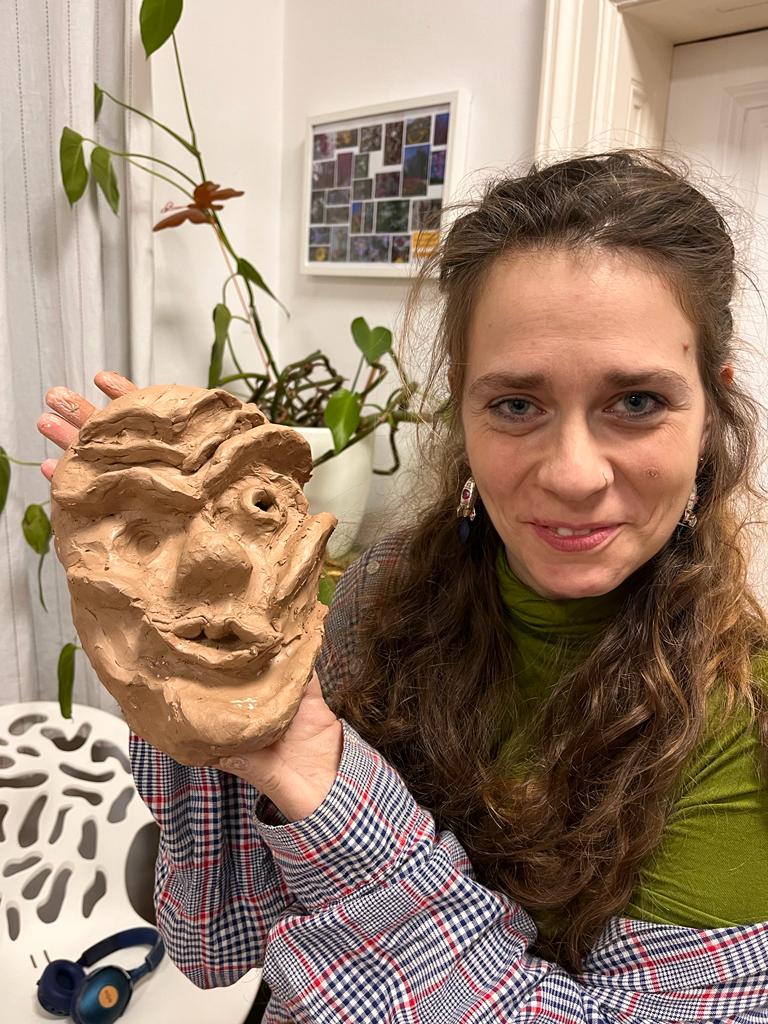
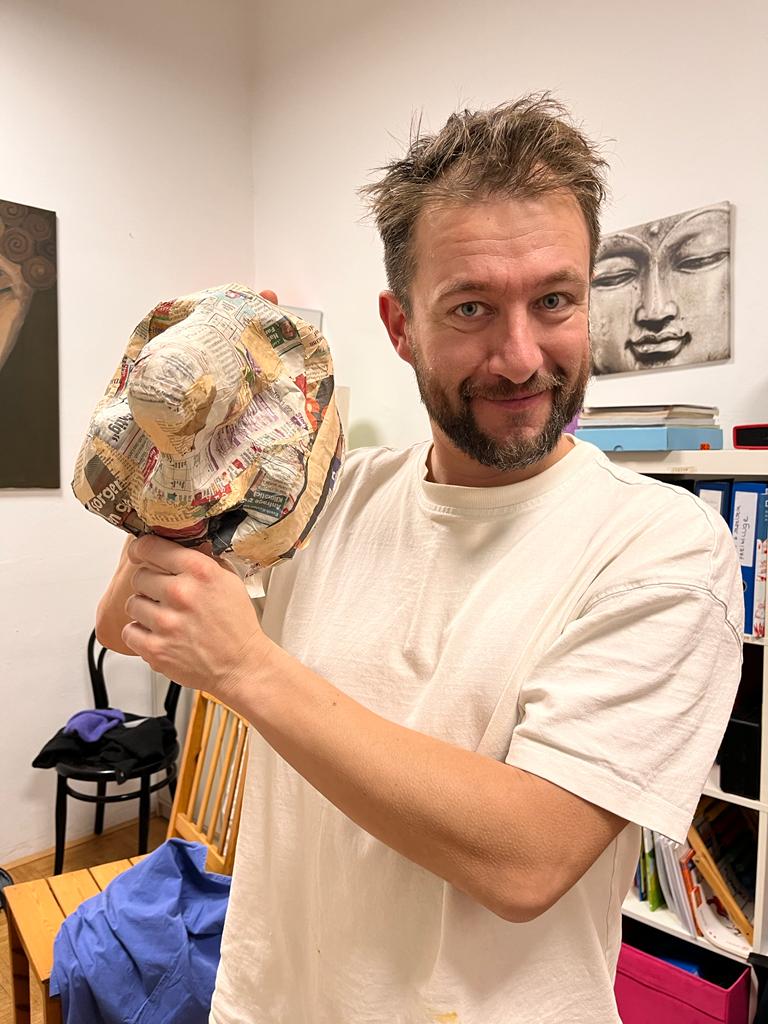
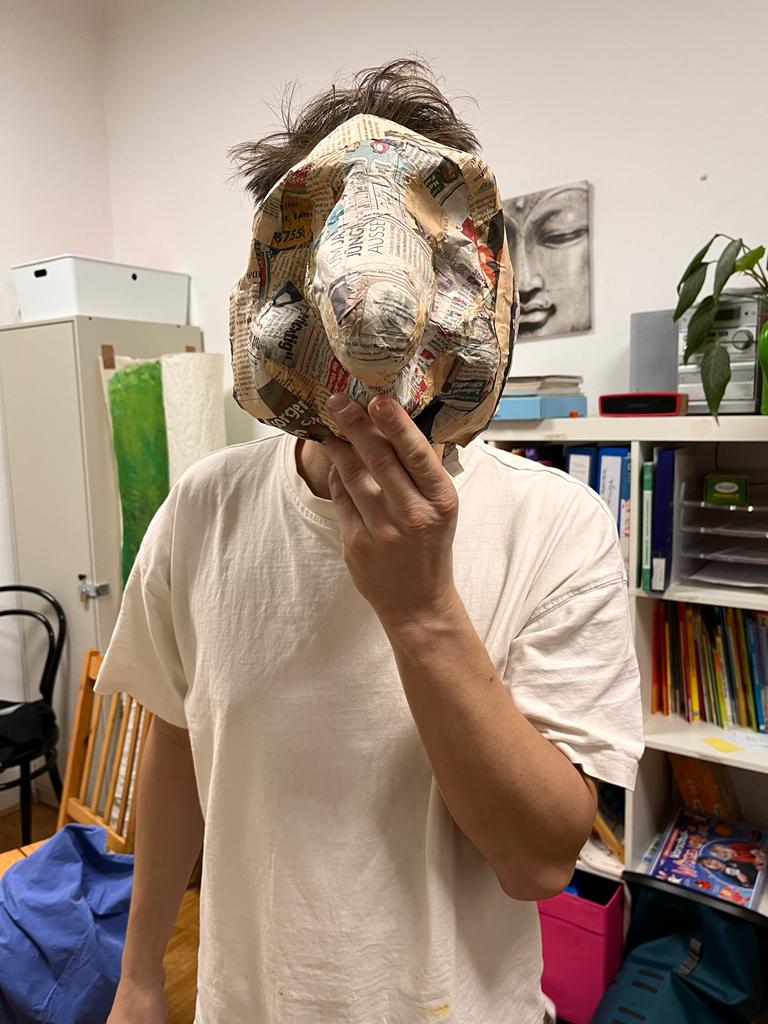
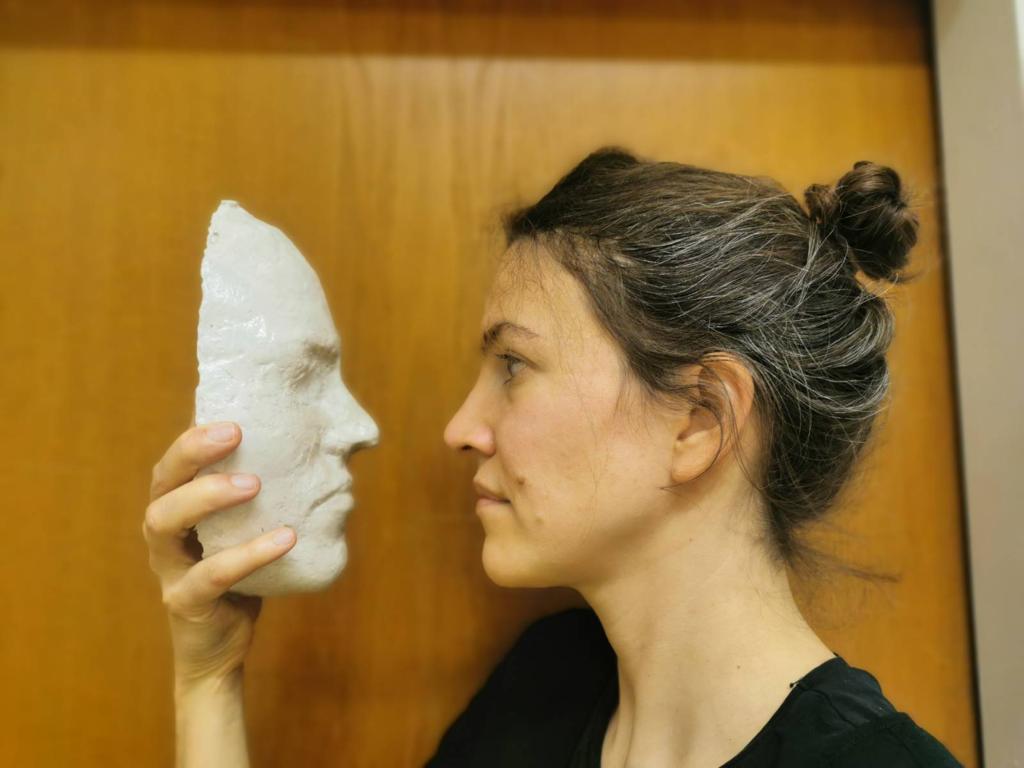
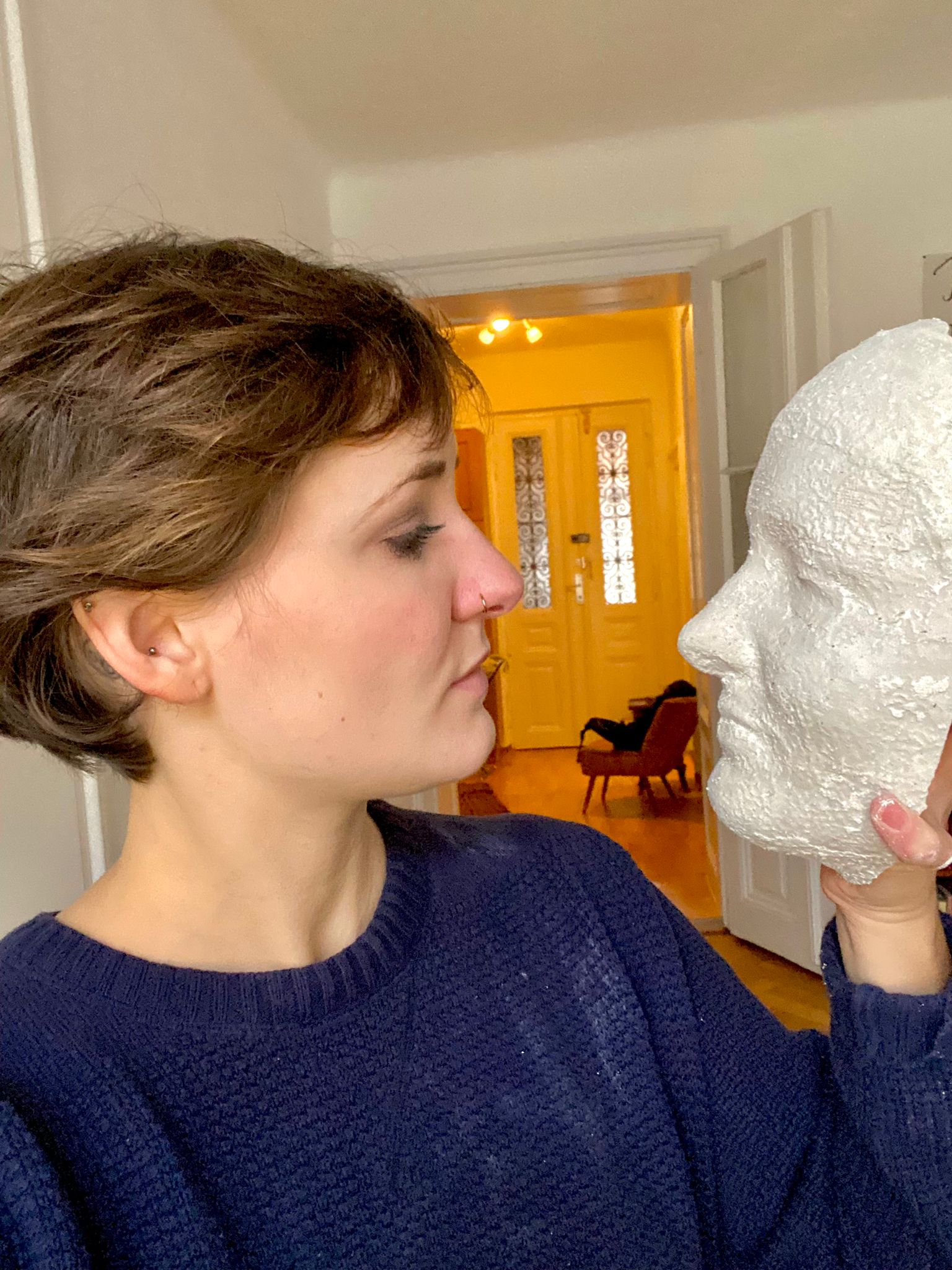
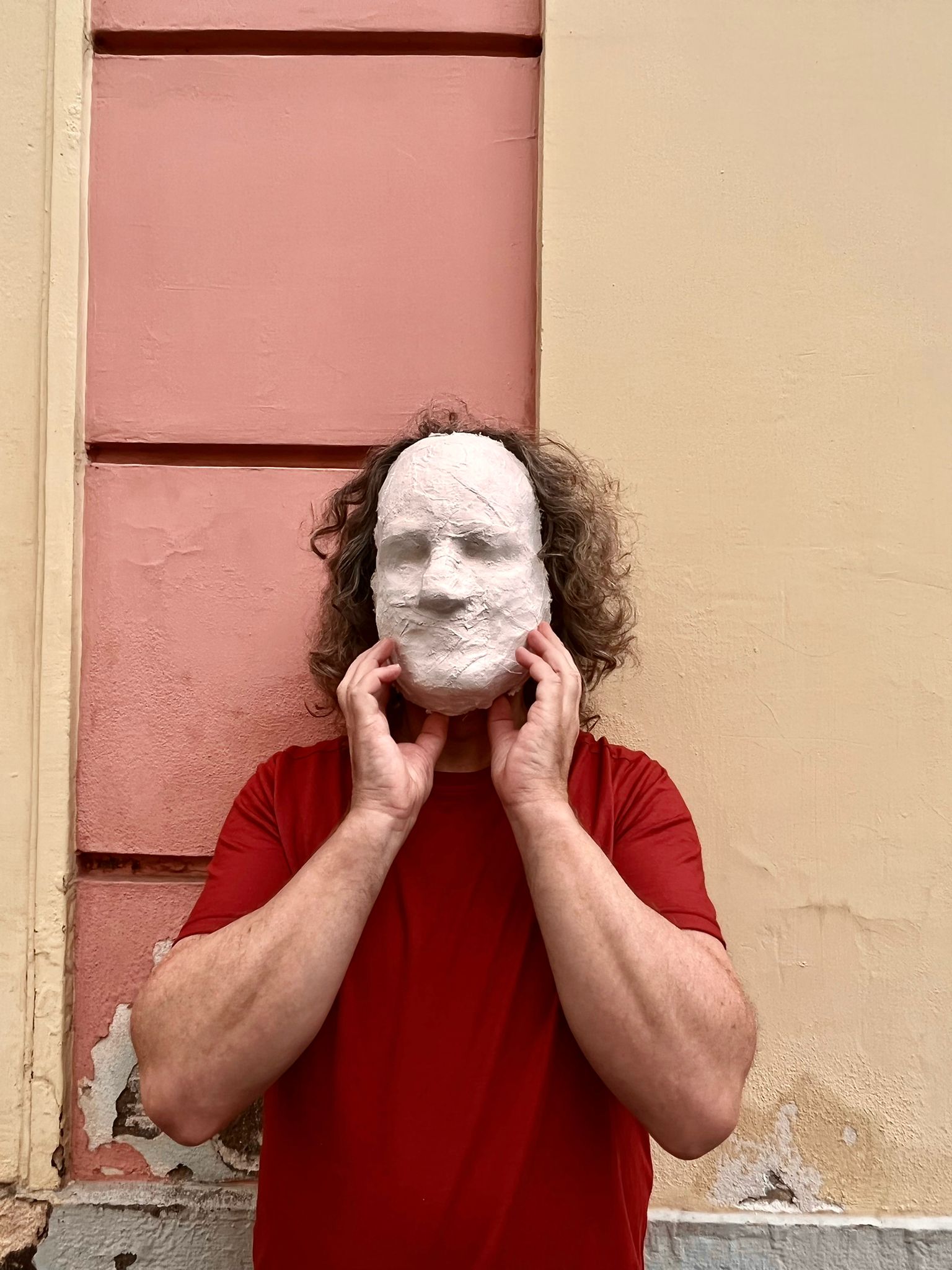
From plaster casts of one’s own face to the imaginative creation of a papier-mâché mask, representing inner aspects found during the previous research. The mask is a free expression of inner characteristics which proved a special interest for the participant during the preparation, or because they reveal in an abstract way some unknown, hidden or repressed aspects or how the persons is not allowed to be or feels to be in reality behind all the social masks and roles.
- Learning content
Discovering different kinds of masks and their meaning for self-reflexion. Learning how to create and construct an artistic mask and use it for self-expression and performance.
- Learning objectives
The participants reflect about social expectations and roles which are imposed like masks on us and on others. They raise consciousness about factors which influence the roles we play, causing discrimination with regard to e.g., our gender, skin colour, sexual orientation or disabilities. Discovering the different kinds of masks we wear, by constructing and playing with masks, raises self-consciousness and awareness about social roles and stereotypes.
- Digital materials to be used
- Module 0 – Introduction: Different kinds of masks: Memo game
- Instruction video/ photos: Mask building
- Optional: Additional module with information about mask-traditions around the world as well as background information about the manipulation of masks
- Other important information
- Online
Module 1, 2, 3 and 8 are done online (they can also be done in presence, when the participants prepare and bring their own objects from home), the mask-making workshops should be in presence and can only be done if the support of fellow participants.
How to make it?
- Number and type of staff needed
2 trainers
- Technologies and learning materials needed
Every participant needs a computer with camara for online modules. During presence modules a music recorder and a tablet/laptop for presenting material is needed.
Consider creation an electronic communication forum to keep in touch with participants and offer a platform for exchange withing the groups
- Which preparatory work is required
The mask making should be tried out by the trainer in advance and the right quantity and quality of material (plaster bandages, plaster powder, oil, clothes, paper, cardboard, colours etc) should be provided.
The space should be prepared, clean to lie on the floor.
Select music for the physical work.
The links of the digital tools should be proved.
Provide a space for the presence modules and maybe another one for the exhibition/performance with audience.
- Evaluation
After the final presentation there should be a space for an in-depth reflection, in virtual or even better in presence mode. It can be in a creative way, for example first drawing and/or writing words to different aspects of the workshop and then sharing thoughts in the group. The questions could be:
- About the content, topic of masks and mask techniques
- The space and ambience
- The contact with the other participants
- The trainers
- What they became aware of, what was new
- Recommendations for the workshop etc.
- Feedback of the participants
The feedback can be collected in a resumed and structured way to improve the offer continuously