Masks on the wall
Project EduArt is co-founded by the Erasmus+ Programme of the European Union
General information
- Slogan: "Masks on the wall"
- Country / City where the offer was designed: Italy - Vicenza
- Location / Space: Children’s reading room in the Bertoliana Civic Library "I tigli" (Vicenza)
- Length: 20 hours
- Type of the used art: Ancient painting techniques
- Type of the offer: Workshop
- Specification of the target group: Unemployed women from different countries and cultures
- Number of participants: From 5 to 8
- Main social problems treated: Social barriers due to different cultural backgrounds, unemployment, limited social interactions
- Competences / skills focused in the course: Intercultural communication, creativity, collaborative work, critical thinking
- Partners: Circuit of the Libraries of the City of Vicenza
- Tags for the offer: Integration, creativity
Description of the offer
- How the mask is used
Women represent the social group most affected by the pandemic. We all know that extra caretaking duties fell upon the shoulders of women as they had to look after their children education and general household management. As a result, women were often forced to neglect their job. By involving them in the workshop activities, women have the opportunity to take off the mask of “wonder women” by showing their creativity, sensitivity and fostering their social skills, empathy, resilience, kindness, self-awareness.
The main theme of the action is centred on what we called social masks: by social mask we mean the personas being forced upon certain group of people especially during challenging times such as the pandemic. This often leads to the strengthening of stereotypes and prejudices which particularly affect minority groups.
In the first phase, several brainstorming meetings took place in which each participant had the chance to express their feelings. Participants also shared their history of discrimination, voicing to their encounter with cultural and racial prejudices. Interestingly, these meetings highlighted how the women involved, while being victims of discrimination, also expressed their own prejudices towards others. Discussing such aspects, allowed the women involved to empathize with one another and underscored the shared desire for a “new beginning”, free of the social masks that have been forced upon them.
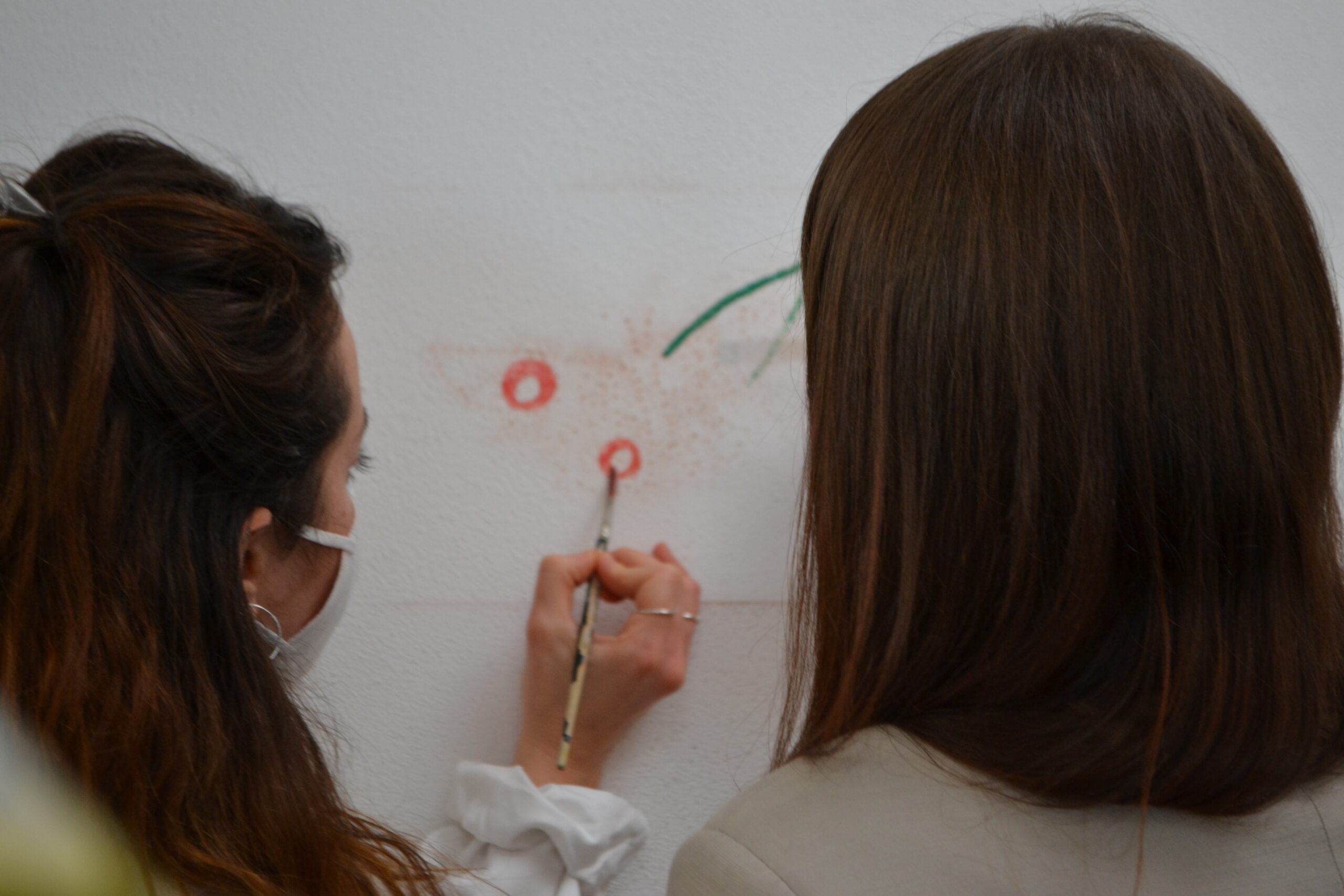
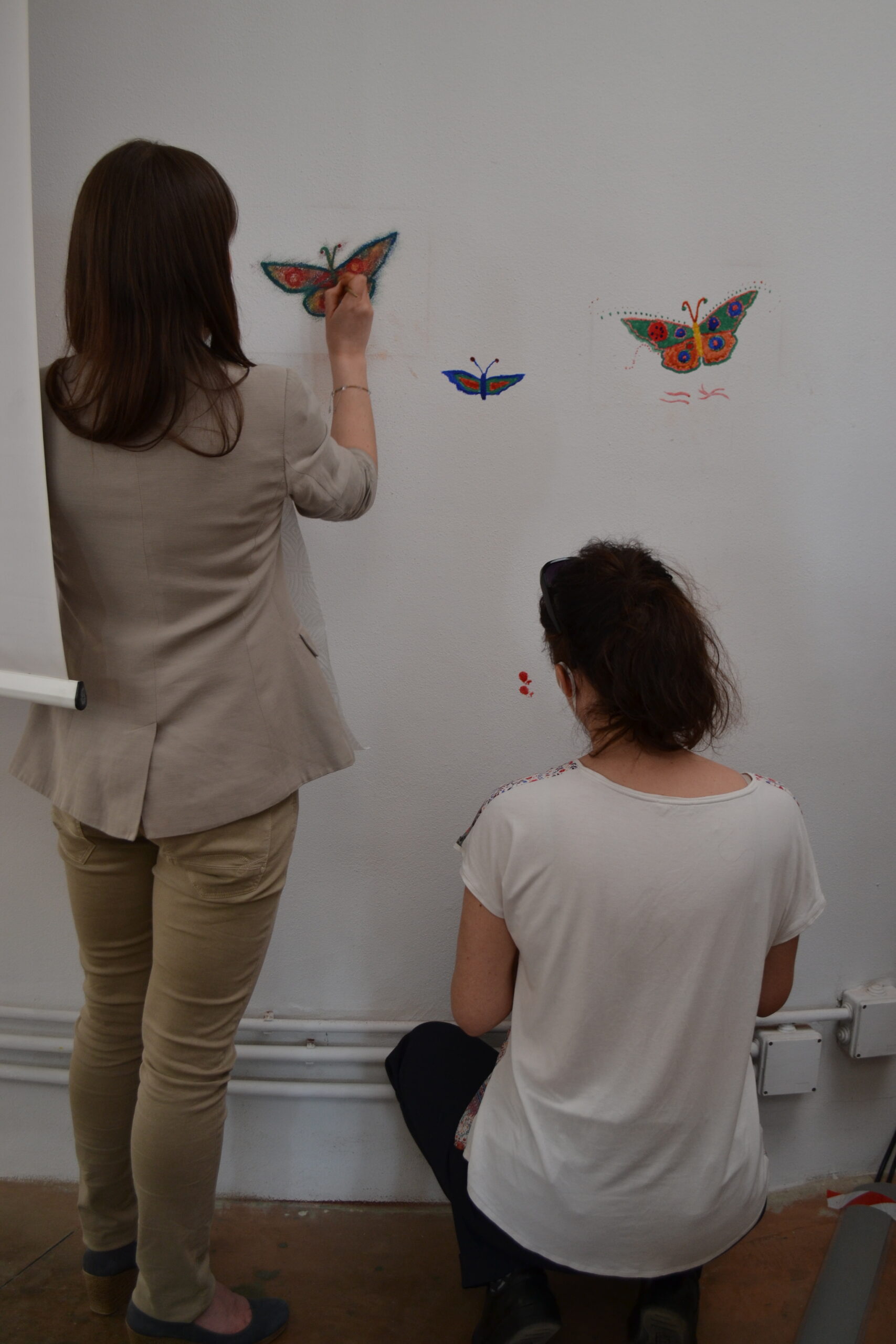
The first part of the workshop focused on skills (e.g. drawing and use of materials), knowledge (e.g. history of painting) and techniques (e.g. creating graffiti art as a way to protest against social inequalities). In the hands-on portion of the course, a mural was created in the reading room of a district library, in which participants interpreted the theme of masks. Drawing inspiration from some graphic literature held in the library, the participants chose to reproduce a deer illustrated by artist Marco Somà.
This animal is also a strong symbol of women empowerment as female individuals usually have a leading role within their herd. Moreover, the deer was represented with tree branches growing on its head to symbolize the will and importance of achieving a new beginning.
The workshop highlighted the importance of creativity as an instrument to express ourselves and to build up social networks. In addition, the course underpins adult education as a valuable solution to a widespread malaise in the social environment.
- Learning content
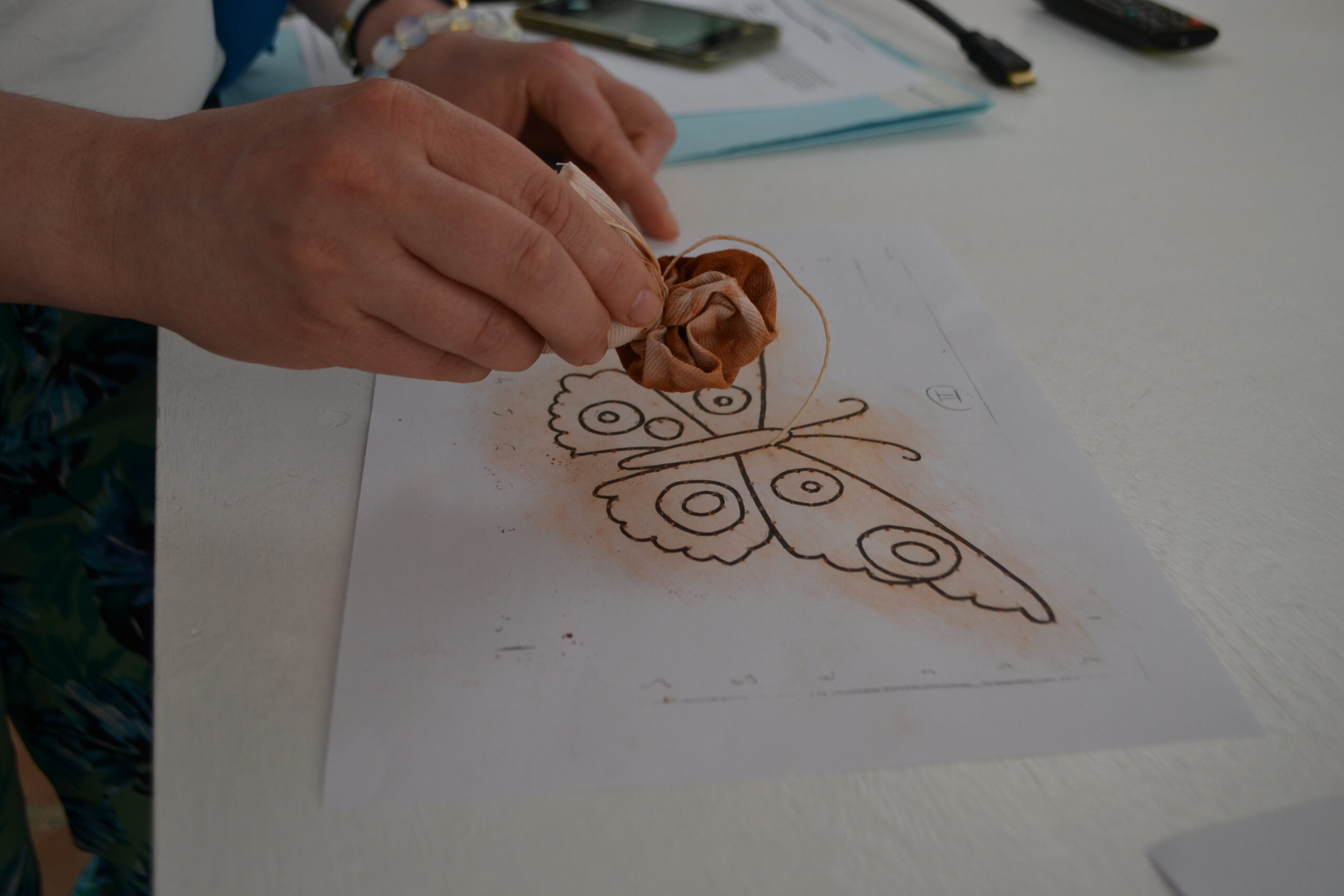
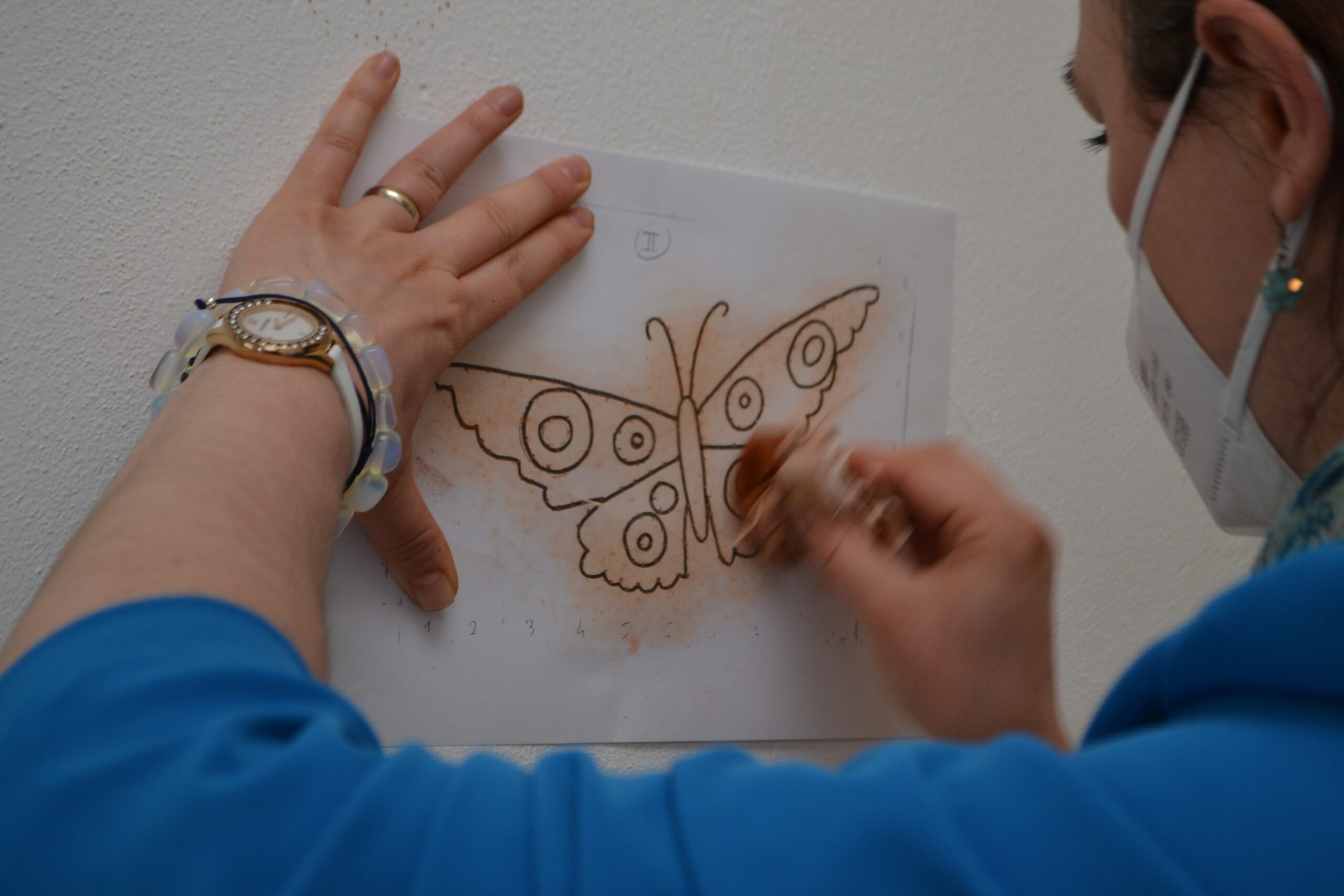
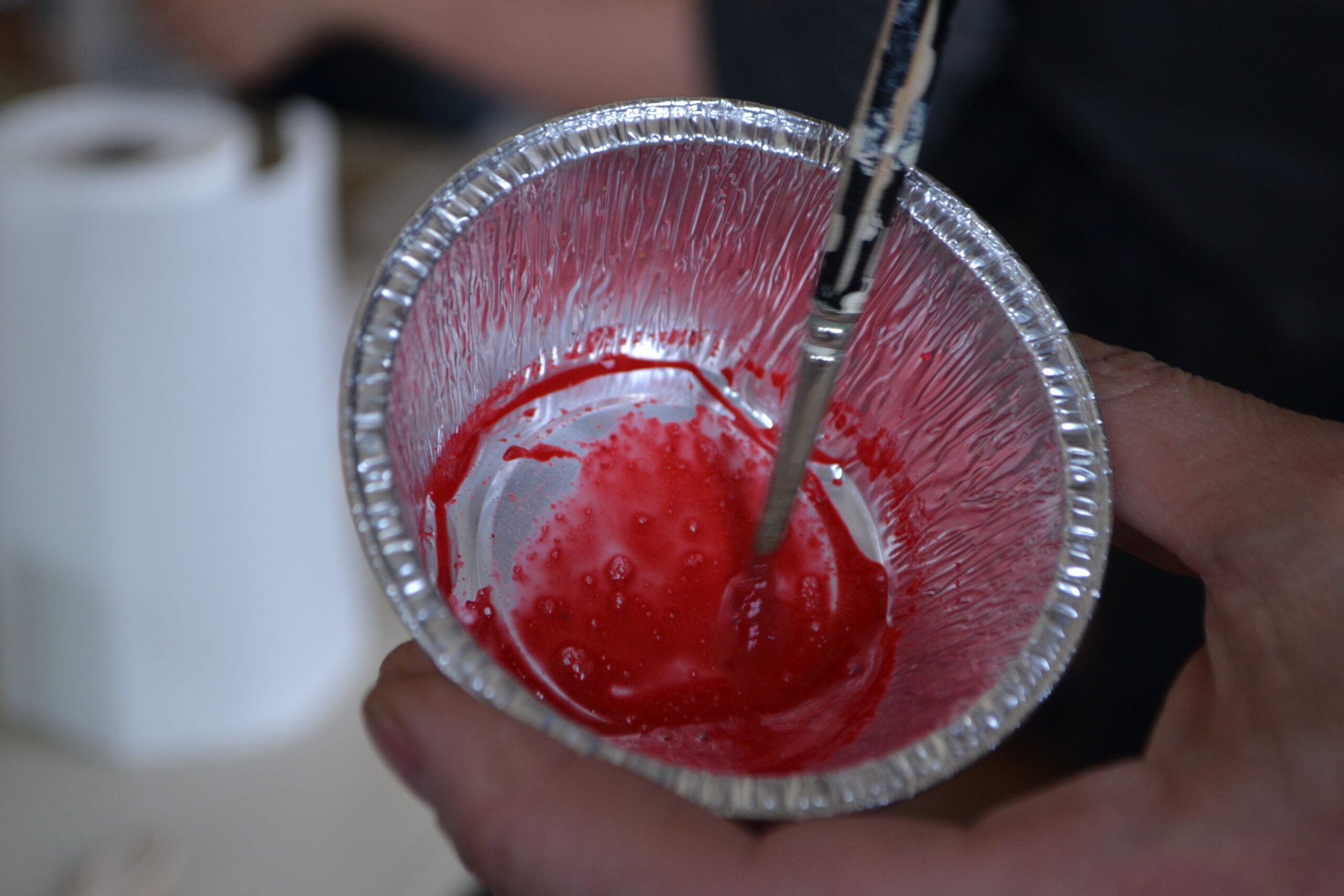
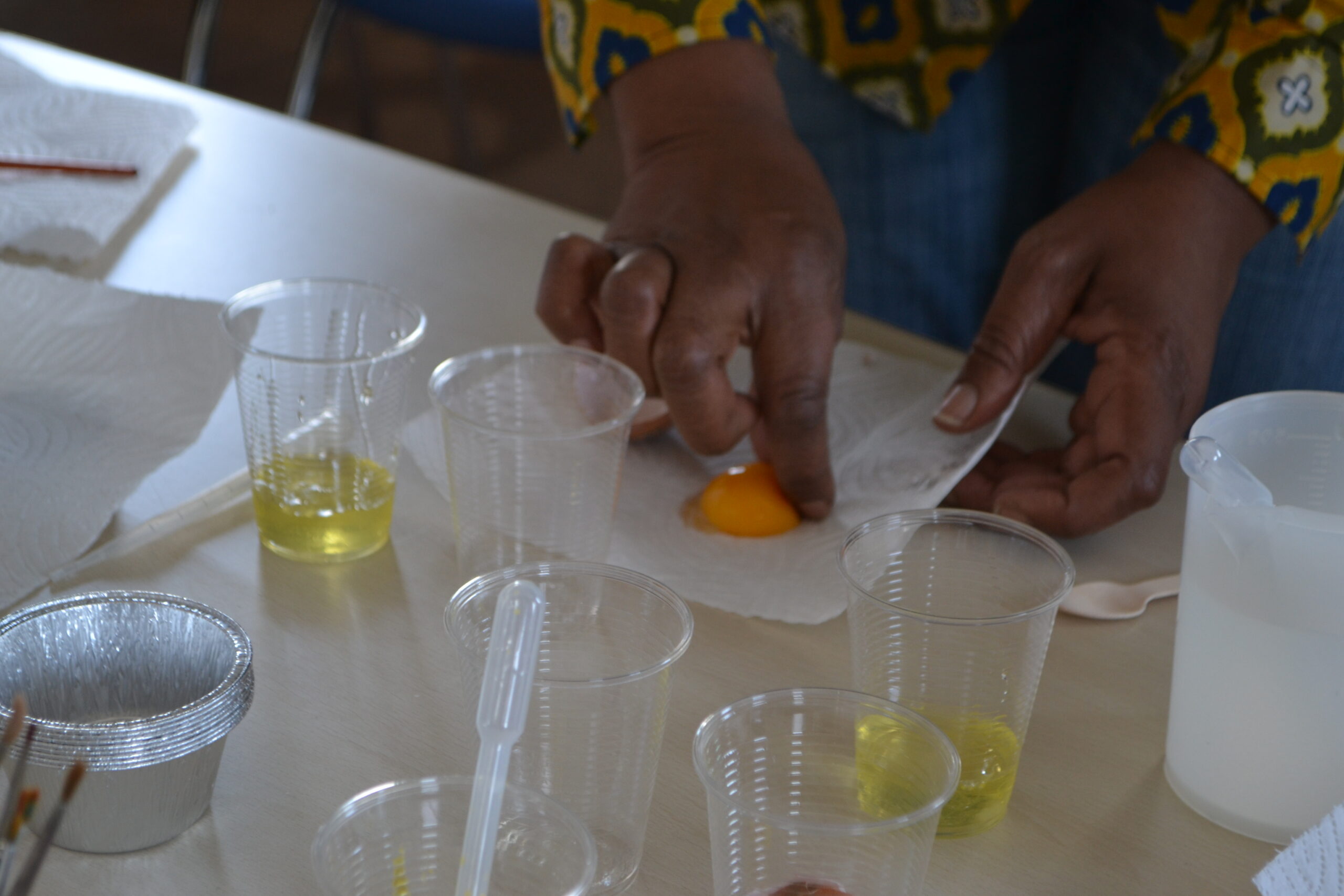
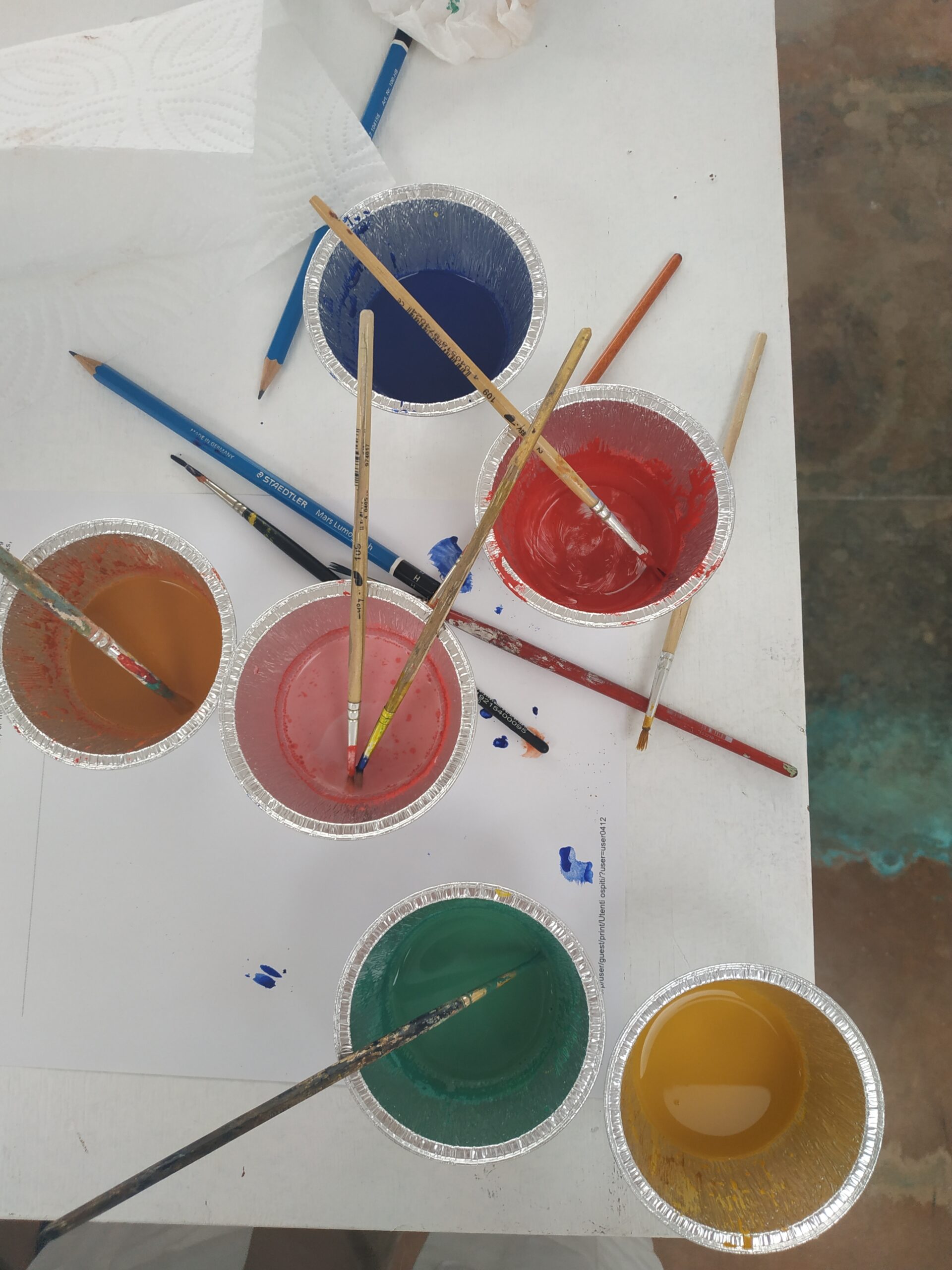
Creation of a mural using the ancient techniques of drawing carryover and creating organic tempera with egg and milk binder.
- Learning objectives
This workshop is aimed at approaching ancient fresco painting techniques using easily available natural materials. Participants get involved individually but also collaborate with other members of the group, overcoming social barriers due to the diversity of age, gender and culture.
- Digital materials to be used
- Glossary
- Creating a buffer
- Preparing for dusting
- Transferring the drawing
- The drawing plot
- Let’s prepare egg tempera: step 1
- Let’s prepare egg tempera: step 2
- Let’s prepare milk tempera
- Comparing color layering
- Let’s transfer the design to the wall to make a mural
- Scenario
- Other important information
Trainers: do not need to be specialists. Thei can practice using the Learning nuggets and then “guide” the learners during the workshop.
Children: if the workshop is provided in presence, you may need an extra trainer that can work with the children, teaching them to make their own tempera and all the activities the adults will do, but in a separate environment. In this way, mothers will finally have time to devote just for themselves while their children are cared for.
- Online
The workshop can be delivered also in virtual or hybrid mode.
Of course, given the target group it addresses, the in-person mode would be preferable, in order to foster cultural encounters and overcome the segregation and loneliness in which many immigrant women live due to their lack of social and good neighbourly relations caused by their lack of knowledge of the host country’s language or residence in rural locations often lacking local transportation.
The large number of instructional videos (the learning nuggets) produced as part of the project, however, make it possible for the workshop to be delivered in both hybrid and virtual modes, thus enabling people with limited mobility due to their physical or environmental conditions to participate.
If the workshop is delivered in hybrid mode, the facilitator will also be responsible for promoting, as much as possible, the aspects of socialization and interaction among the participants.
If the workshop is offered in hybrid or virtual form, each participant will be able to decide whether his or her final product will be a mural painting or whether he or she will be more interested in experimenting with the ancient techniques of painting on paper or cardboard.
How to make it?
- Number and type of staff needed
2 trainers
- Technologies and learning materials needed
1 or 2 tablets per group to show learning nuggets
- Which preparatory work is required
2 hours for preparation of necessary materials (see learning nuggets) and ground cloths when working on the wall.
- Evaluation
If the workshop has been provided in presence, the best option is an oral evaluation.
The trainer can ask to participants to express their feeling about the workshop, using, for instance, the 3 words evaluation method (3 things you liked, 3 things you didn’t like, 3 things you take back home with you. Participants should answer only using 1 word per question).
If the level of knowledge of the local language do not allow such kind of evaluation, you can use the coloured cards method (prepare a set of cards in 3 colours: green, red, yellow. Ask participants to place on a basket a card explaining that a green card means they liked the workshop, red they didn’t like it and yellow they didn’t like or dislike. You can also ask to evaluate the trainers or different activities of the workshop. In that case you must have as many basket as the subjects you want to get evaluated and simply stick a picture to the basket of trainers, children playing, preparing tempera etc.
In the workshop is provided in virtual or hybrid mode, a short evaluation questionnaire can be prepared, using, for instance, Google Form.
Questions can be:
- Did you enjoy the content and techniques addressed?
- Did you like the place where the workshop was held?
- Did you feel comfortable with the other participants?
- Did you feel comfortable with the trainers?
- Would you do a workshop like this again?
- Do you have any recommendations to improve our workshop?
- Feedback of the participants
Feedbacks collected in the evaluation session are a precious tool to improve the quality of the workshop but should always be interpreted taking into consideration the specifics of the target group, situation, and time (e.g., if the workshop was done during Ramadan and some of the participants were Islamic).